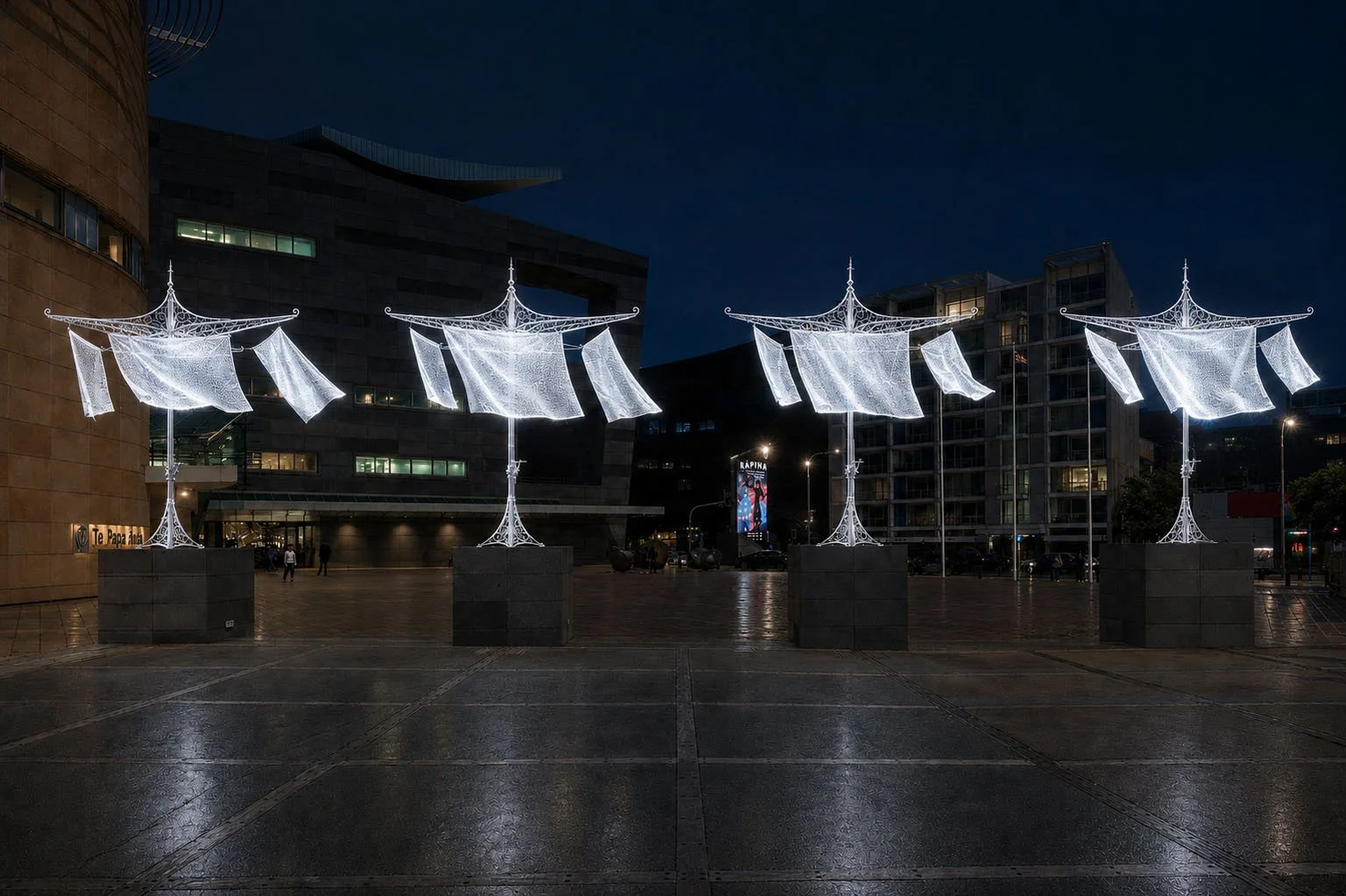
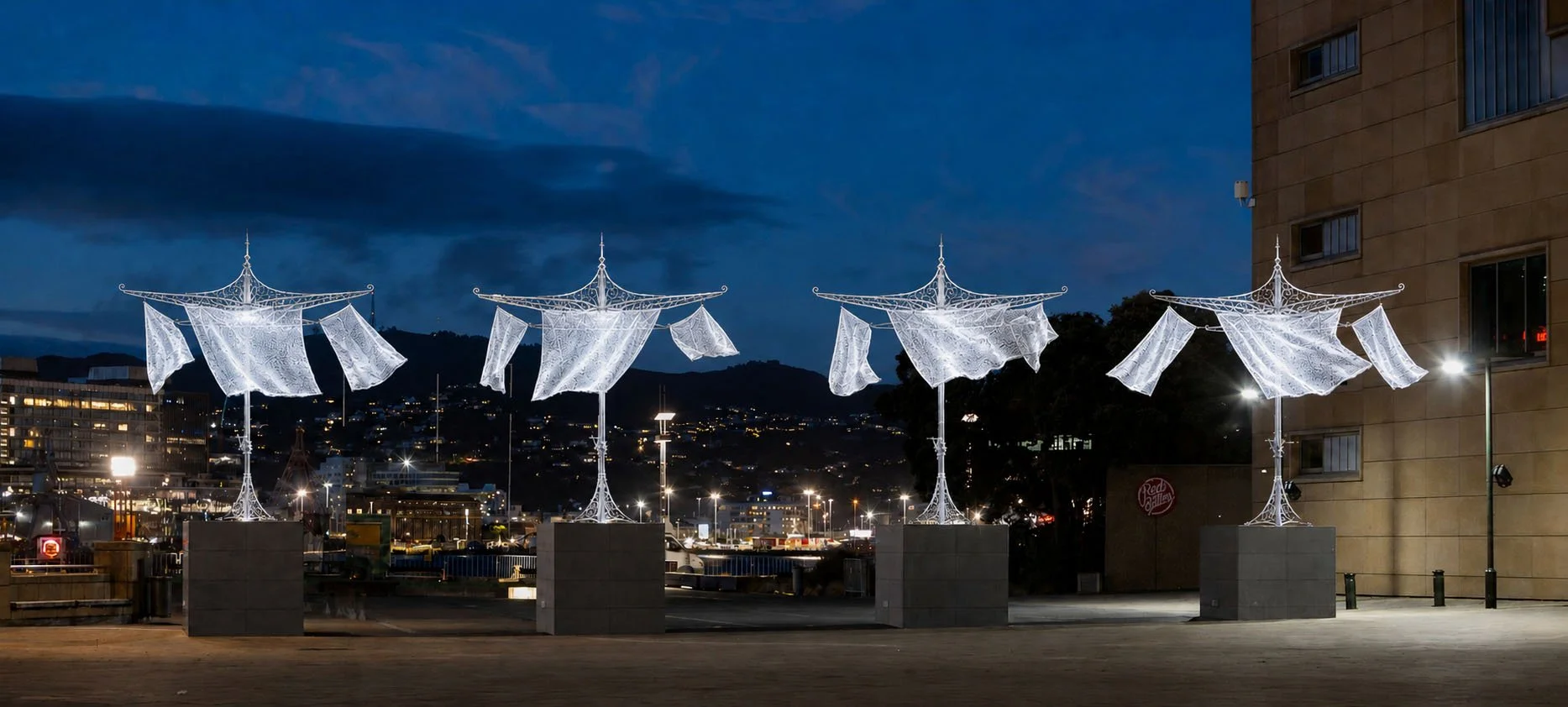
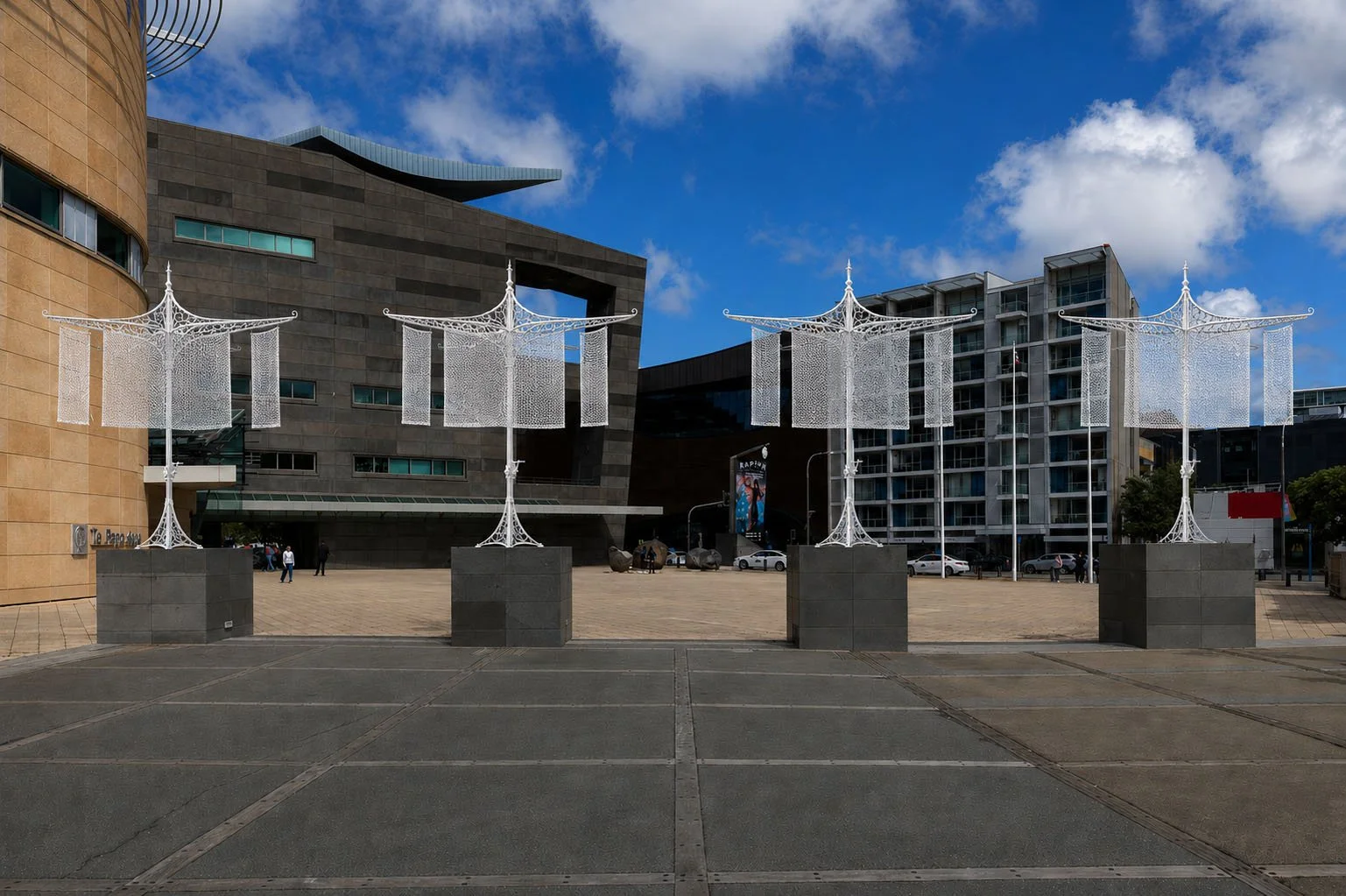
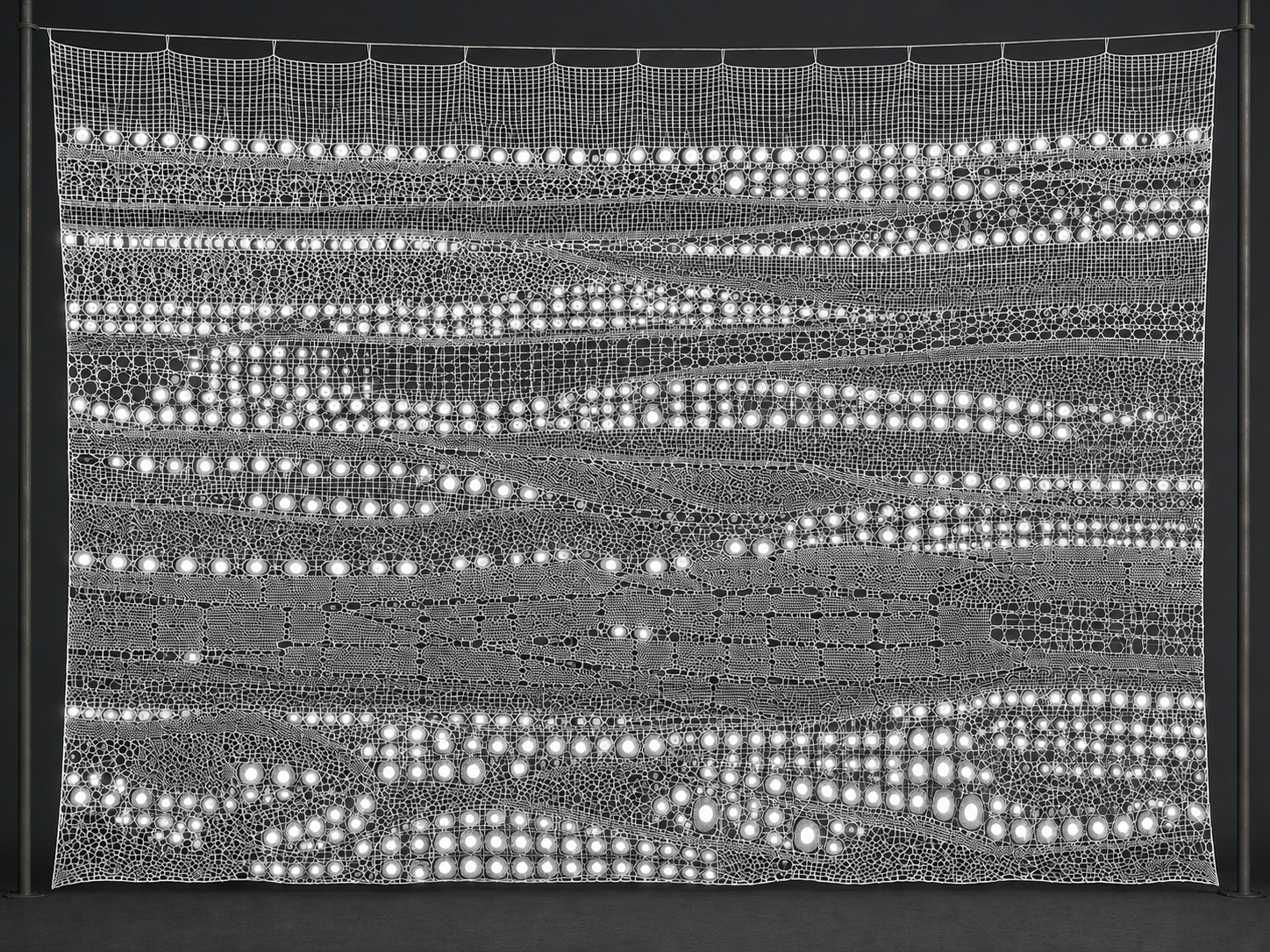
'Cloud Orchard' begins with the familiar form of the rotary clothesline, a ubiquitous feature of backyards, farms, and suburban gardens throughout New Zealand. Embedded within everyday life and associated with the rhythms of domestic labour, in ordinary use it is a structure designed not to be looked at, but simply used. Neither architecture nor furniture, its purpose is not contained within itself but realised through what passes across it: cloth, weather, and time. It is fundamentally a structure of support.

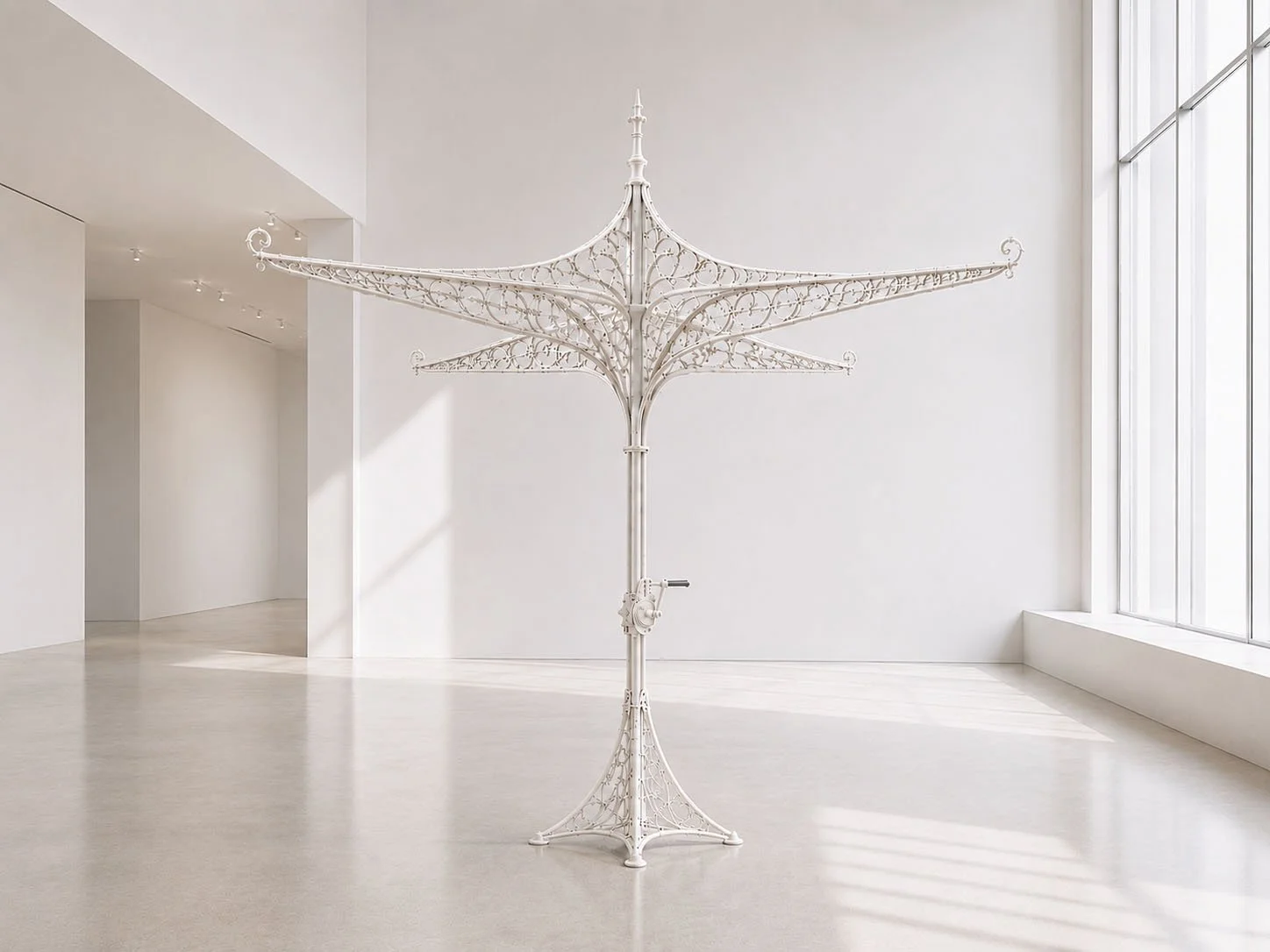
In its ordinary form, the clothesline is organised around a central axis from which connections radiate outward. Yet it also belongs to a broader family of structures: the pavilion, the loom, the tent, the wheel, the tree, and others that gather materials, objects, and people around a common centre.

This underlying framework is reimagined through cast-iron and aluminium lacework drawn from botanical ornament, spreading across the structures in a network of espalier-like branches and unfurling tendrils. Suspended from each structure are large white panels of open architectural mesh, custom knitted from thin polyester cord using a mechanical warp knitting process. Subtle shifts in density and pattern are integrated directly into the textile, creating surfaces that remain visually rich while retaining their openness and permeability. Flexible yet resilient, these textile panels catch both light and wind, allowing sunlight, rain, and air currents to become active participants in the work, producing continually shifting configurations throughout the day. After dark, the photoluminescent and retro-reflective surfaces of both the structures and suspended mesh transform the installation into a field of luminous, spectral forms that remain visible long after sunset.

As the suspended sheets billow and move through the space, they shift between abstraction and association. At different moments they may suggest sails, clouds, wings, waves, or banners before dissolving back into pure shape and movement.

Through this continual process of transformation, the ubiquitous clothesline is elevated beyond its everyday function, assuming an almost mythic presence within the landscape. Once a humble structure of support, it becomes a monument to the unseen frameworks that gather people, materials, weather, and time into the fabric of everyday life. Continually reshaped by weather, light, and atmosphere, 'Cloud Orchard' invites visitors to encounter the forecourt as a dynamic field of forms suspended between the built environment and the elemental forces of the harbour.